
⚡ Regular vs. Irregular Verbs
The definitive guide to Past Simple forms
📊 Comparison Chart
📝 Quick Practice
Complete the sentences with the correct past form of the verb in parentheses:
1. Yesterday, I ________ (walk) to school.
2. Last night, she ________ (see) a movie.
3. We ________ (play) football in the park.
4. He ________ (eat) pizza for dinner.
2. Last night, she ________ (see) a movie.
3. We ________ (play) football in the park.
4. He ________ (eat) pizza for dinner.
⚡ The Great Comparison
Rule-Followers vs. Rule-Breakers
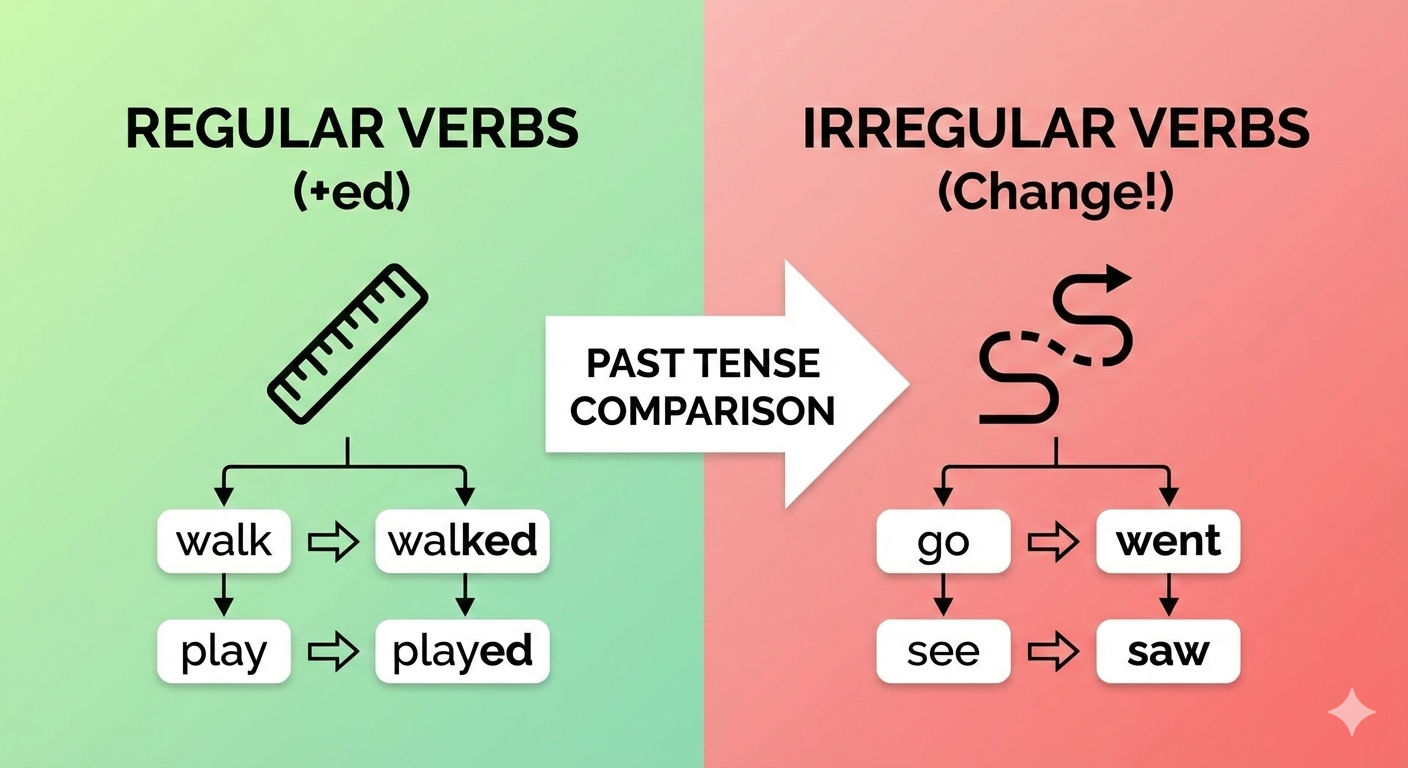
📏 Regular Verbs
The “Rule-Followers”
These verbs are predictable. You simply add -ed to the end.
- 🏃 Walk → Walked
- 🍳 Cook → Cooked
- 📱 Talk → Talked
“I cooked dinner last night.”
🌀 Irregular Verbs
The “Rule-Breakers”
These verbs are unique. The whole word changes or stays the same!
- ✈️ Go → Went
- 🍕 Eat → Ate
- 👁️ See → Saw
“I ate pizza last night.”
⚠️ Common Student Error
Students often try to add “-ed” to irregular verbs because it feels “safer.”
❌ Incorrect: “I goed to the park.”
✅ Correct: “I went to the park.”
🧩 Putting it Together
In a real conversation, you will use both types in the same sentence:
“Yesterday, I walked (regular) to the store and bought (irregular) some milk.”